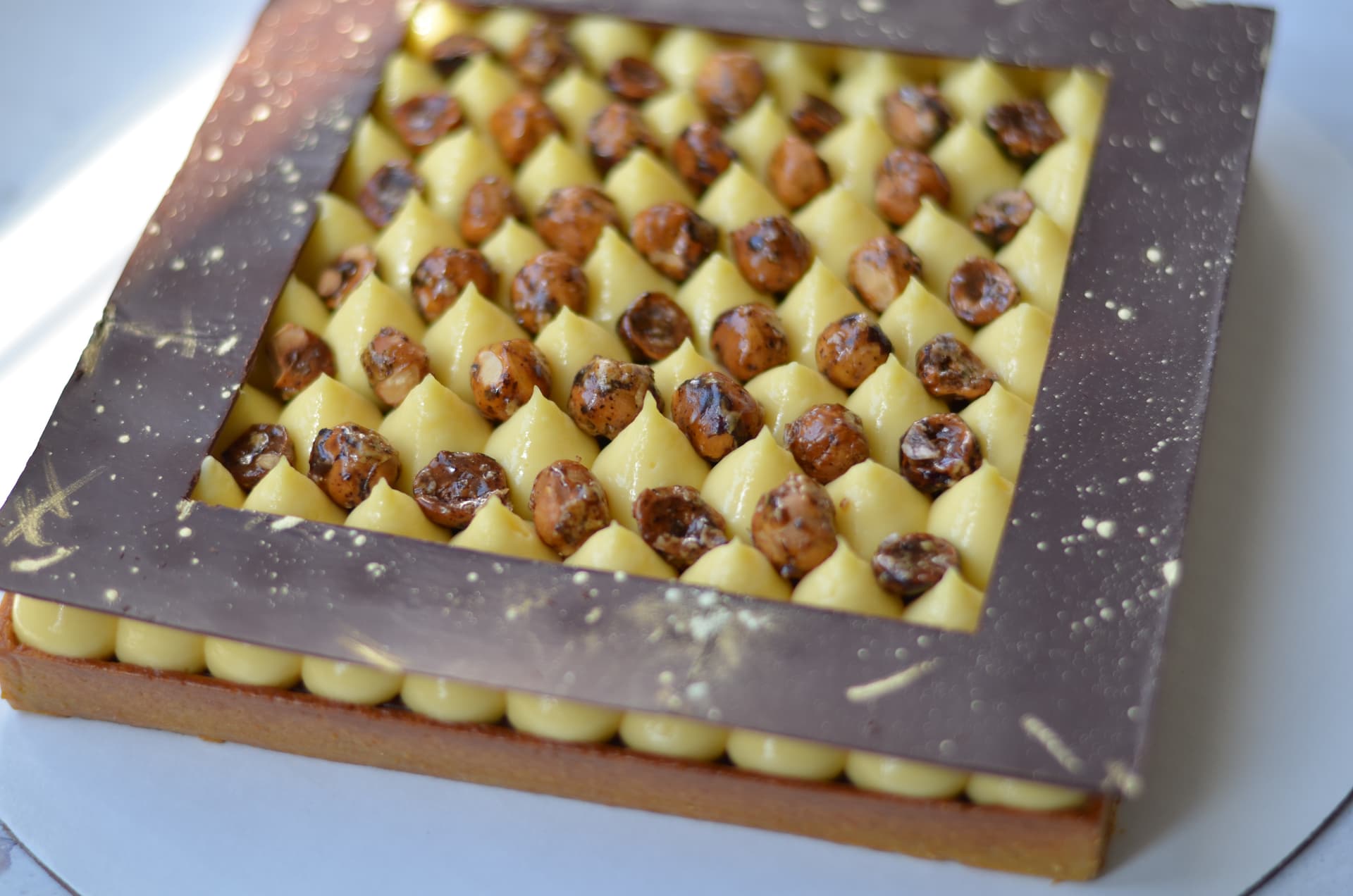
"Less sugar, more flavor" is not a slogan against sweetness. Dessert needs sweetness. Sugar gives structure, tenderness, color, preservation, and pleasure. The question is not whether sugar belongs in pastry. The question is whether it is doing useful work.
When sugar becomes the loudest part of a dessert, other details disappear. Fruit tastes less like fruit. Chocolate loses bitterness and depth. Nuts become background. Citrus becomes perfume without clarity. The guest may enjoy the first bite and feel tired by the third. A dessert can be technically correct and still leave the palate with too little information.
Sweetness is one part of balance
Balance is not a fixed number. A tart fruit dessert may need more sweetness than a milk chocolate cream. A bitter caramel may need sugar to carry its depth. A frozen dessert may need a different formula because cold temperatures mute flavor. Context matters.
The goal is to make sweetness proportional to the idea. If the dessert is about pear, the pear should be recognizable. If it is about pistachio, the nut should not be buried. If it is about chocolate, bitterness, acidity, fat, and salt all need room. Sugar should support the structure rather than cover it.
Flavor often comes from contrast
Clear flavor is rarely one-dimensional. It usually comes from contrast: acid against fat, salt against sweetness, crisp against cream, warmth against coolness, fruit against pastry, floral aroma against toasted notes. Reducing sugar can make those relationships easier to perceive.
This is why a lighter hand can feel more generous, not less. A guest can taste the sequence of the dessert instead of receiving one continuous sweetness. The dessert has movement. It changes from first bite to last.
Ingredients deserve to be heard
Good ingredients do not need to be hidden. Vanilla has nuance. Butter has depth. Fruit changes by season. Chocolate carries origin, roast, acidity, and bitterness. Herbs can lift a dessert without turning it savory. Nuts bring texture, fat, and aroma.
When a dessert is built around fewer, clearer ingredients, quality becomes more visible. There is less space for shortcuts. That can be demanding, but it is also honest. It asks the dessert to stand on its ingredients, not on excess.
Modern guests often want a cleaner ending
Many guests still want dessert, but they may not want heaviness at the end of a meal. They may want something expressive, satisfying, and complete without feeling overwhelmed. Restaurants and hospitality teams can respond to that without making dessert feel austere.
A restrained dessert can still be beautiful. It can still feel celebratory. It can still hold pleasure. The difference is that it leaves the guest with clarity instead of fatigue.
Sweetness needs judgment
Less sugar is not automatically better. A dessert can be under-sweetened, thin, or severe. Balance requires judgment. It means tasting carefully, understanding the role of each ingredient, and adjusting until the dessert feels intentional.
The final question is simple: what should the guest remember? If the answer is only sweetness, the design is unfinished. If the answer is pear, basil, brown butter, crisp pastry, cool cream, or the feeling of a clean final bite, then sweetness has found its place.