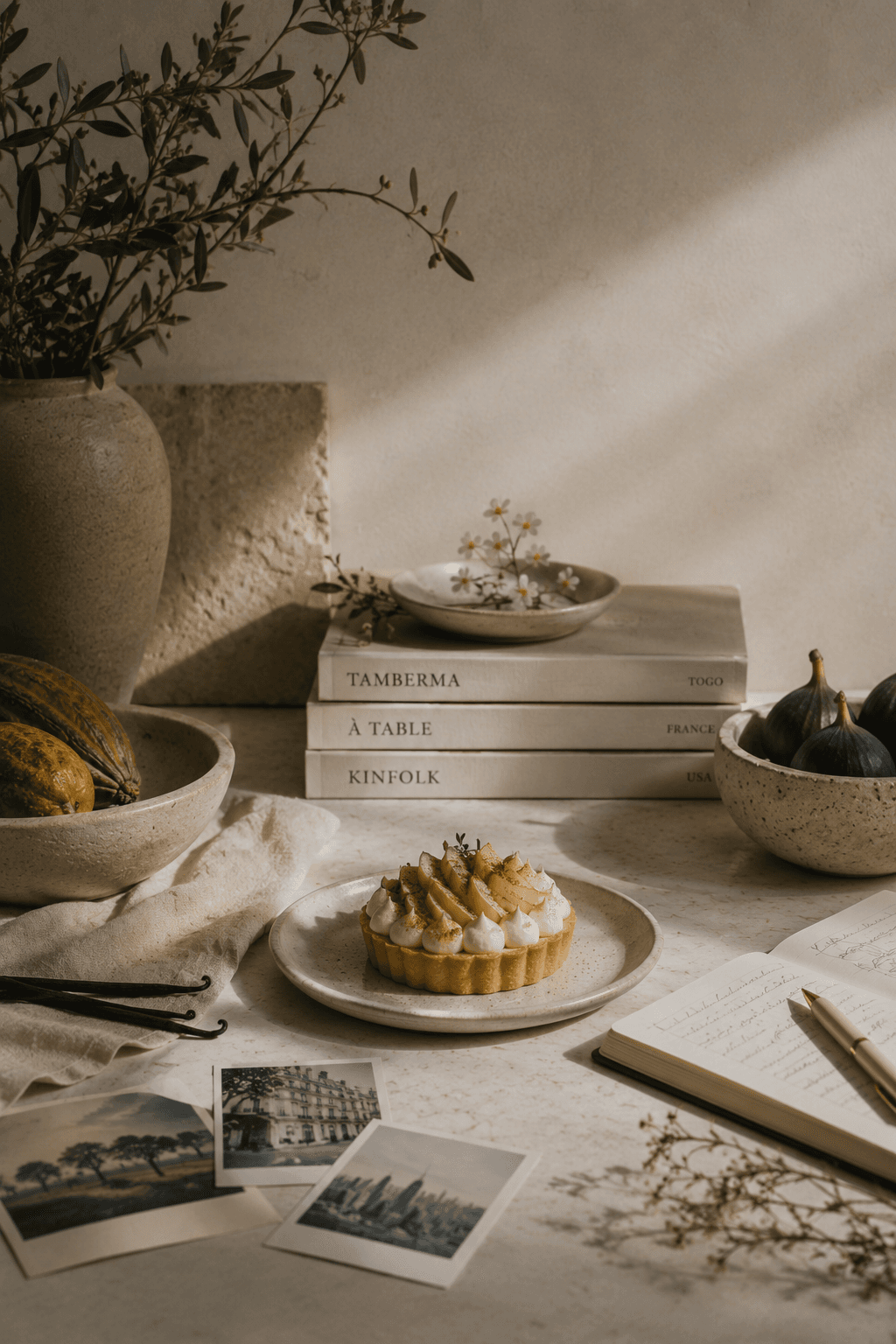
Seasonality is often described as a value, but it is also a way of listening. It gives a dessert its first direction before anything is sketched. Instead of asking what dessert could be, the question becomes more specific: what is this moment offering, and how should it be expressed?
That question can change everything. A ripe strawberry does not ask for the same treatment as a late-season pear. Citrus in winter carries a different feeling than stone fruit in summer. Herbs, flowers, nuts, spices, and dairy all behave differently depending on the season, the climate, and the context of the meal.
Seasons create natural limits
Limits can make design stronger. When everything is available all the time, a dessert program can become unfocused. Seasonal thinking introduces discipline. It asks the kitchen to choose, edit, and respond.
This does not mean every ingredient must be local or every menu must change constantly. Some restaurants need stability. Some events are planned far in advance. Seasonality can still guide the flavor, color, texture, and emotional tone of a dessert.
The best seasonal desserts do not announce themselves too loudly
A seasonal dessert does not need to be covered in signals. It does not need a long list of market ingredients or a decorative flourish for every component. Sometimes the most seasonal choice is simplicity: a fruit cooked carefully, an herb used lightly, a cream kept simple, a pastry element baked with precision.
The guest should feel the season before they read it. Warmth, freshness, ripeness, acidity, spice, and texture can communicate more than explanation. A dessert becomes stronger when the season is present in the eating experience, not only in the menu description.
Seasonality supports memory
Food memories are often tied to time. The first citrus of winter, the smell of toasted nuts, the softness of summer fruit, the brightness of herbs, the comfort of spices. These details can make dessert feel specific rather than generic.
For restaurants, cafes, hotels, and events, specificity matters. A dessert that could exist anywhere may satisfy a craving, but a dessert connected to a moment can become part of the guest's memory of the place or occasion.
Practicality still matters
Seasonal work must be realistic. A delicate fruit may not hold for banquet service. A garnish may be beautiful but difficult to source consistently. A component may taste best in a narrow window and become unreliable outside it. Good dessert design respects those constraints.
The goal is not to chase novelty. The goal is to make a dessert that belongs to the season, the kitchen, and the guest. Sometimes that means using a preserved element, a stable base, or a garnish that can move with service. Useful choices can still be poetic when they serve the idea.
Let the season lead, then edit
Seasonality gives the first answer, not the final one. After the ingredients are chosen, the dessert still needs balance, structure, texture, and service logic. It needs to be tasted and edited. Anything that does not support the final idea should be removed.
That is the quiet value of seasonal design. It begins with attention. It ends with clarity.