Studio Note
A dessert can be technically correct and still feel replaceable.
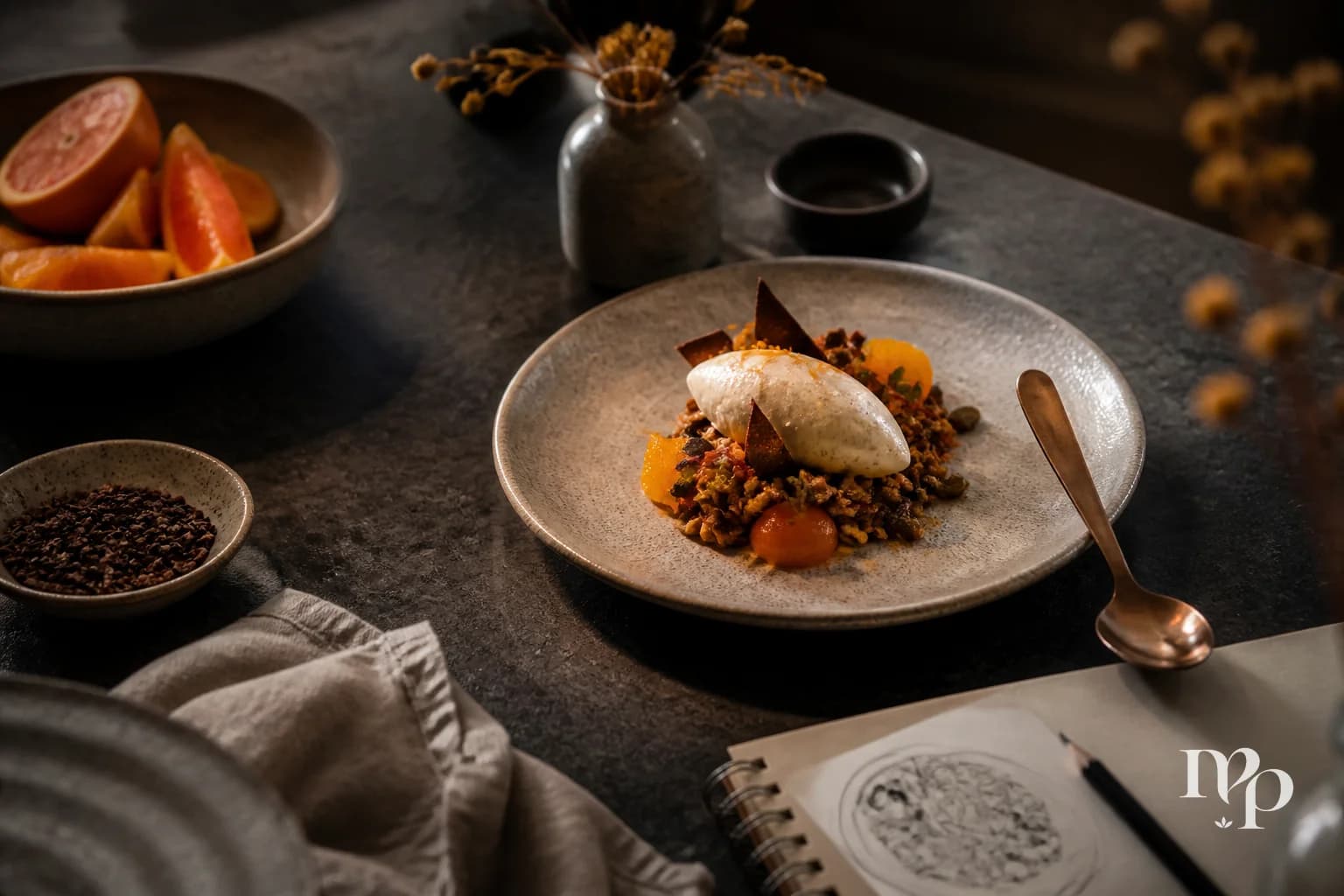
That was the thread running through this week’s notes: the final course needs more than finish. It needs a reason to exist inside that specific restaurant, cafe, hotel, or hospitality setting, and the guest should be able to feel why it exists by the final bite.
Not every menu needs a dramatic signature dessert. Some rooms need restraint. Some need one highly recognizable plate. Some need a tighter dessert list that protects the savory menu instead of competing with it. The mistake is treating dessert as a separate little performance at the end of the meal.
Guests do not experience it that way. They receive dessert after the room, the pacing, the drinks, the salt, the fat, the conversation, and the appetite have already done their work.
So the better question is not, “What dessert will impress?”
It is, “What can the guest still welcome, and what should they remember?”
Dessert Strategy
Signature desserts get misunderstood because people often start with the visible parts: height, garnish, shine, movement, the element that photographs well.
Those details can help, but they cannot carry a weak idea.
A useful signature dessert usually has three jobs:
- It reflects the restaurant’s point of view. If the savory menu is sharp, lean, smoky, fermented, coastal, nostalgic, restrained, or produce driven, the dessert should know that. It does not have to mimic the savory menu, but it should feel related to the same house.
- It respects the appetite left at the table. A dessert designed in isolation can become too generous for the actual meal. More cream, more sauce, more crumble, more garnish. On the plate, it reads as abundance. At the table, it can read as fatigue.
- It gives the guest one clear memory. Not six ideas fighting for attention. One clean impression: bitter chocolate and olive oil. Cold citrus and toasted grain. Warm custard and burnt sugar. Almond, stone fruit, and salt. The memory does not need to be loud. It needs to be specific.
What many restaurants get wrong is trying to make the dessert important by adding more. More components. More technique. More naming. More drama.
But a dessert becomes signature when it feels inevitable. If it could sit on five other menus without changing meaning, it probably is not specific enough yet.
A good menu exercise for operators: take the dessert you most want guests to remember and remove one component. If the idea gets clearer, the dessert was carrying decoration instead of identity.
Ingredient Study
This week’s ingredient lens is bitterness.
Bitterness is one of the most useful tools in restaurant dessert design because it helps dessert behave like part of a meal, not an escape from it.
Sweetness closes the loop. Bitterness keeps the palate awake.
That can come from many places:
- dark chocolate with real structure, not just cocoa color
- coffee used as seasoning, not as a theme
- caramel taken past polite sweetness
- citrus peel, pith, or marmalade
- olive oil with pepper and grass
- toasted grains, nuts, seeds, or buckwheat
- chicory, black tea, or burnt honey
The tradeoff is that bitterness needs control. Too little and it disappears under sugar. Too much and the guest feels punished at the end of the meal.
The best use is often quiet. A bitter edge can make cream feel lighter. It can make fruit feel sharper. It can make chocolate feel adult without making it severe. It can also give a dessert a stronger relationship to wine, coffee, amaro, tea, or a final cocktail.
For hospitality menus, bitterness is especially useful when the dessert list needs to feel grown up without becoming heavy. It gives structure where sugar alone would flatten the finish.
One simple test: if the dessert tastes best in the first bite but becomes tiring by the fourth, it may need bitterness, acidity, salt, temperature contrast, or a smaller portion. Sugar is usually not the missing piece.
From Mistoura Pastry
This week’s journal focused on signature dessert development: how a final course earns identity, how it fits the room, and how it respects the guest’s remaining appetite.
- When the dessert has a point of view A dessert can be polished and still say very little. This piece looks at how flavor, texture, service, and restraint help a dessert become distinctive instead of merely finished.
- Before a dessert carries the restaurant's name A named dessert carries weight. This note looks at what needs to be true before a restaurant lets one plate represent the house.
- When one dessert speaks for the house A house dessert is not a trophy. It should belong after the food, inside the room, and within the pace of service.
- The dessert only this restaurant could serve A composed dessert can still feel borrowed. This piece asks what the dessert should know about the room before it reaches the table.
- When a signature dessert has a job to do A signature dessert is not just a louder dessert. It needs a role in the meal, the menu, and the guest’s final memory.
- The dessert that respects the appetite Guests can want dessert and still not want much. This note looks at portion, richness, and the appetite that remains after the meal.
For operators thinking through a dessert list, the shared thread is simple: the final course should not feel like an appendix. It should feel edited into the experience.
Design desserts that guests remember: mistourapastry.com
Question of the Week
If one dessert on your menu had to explain the restaurant without a server saying a word, which one would it be?
And the harder follow up: would it still make sense after the actual meal your guests just ate?
If the answer is unclear, the dessert may not need more decoration. It may need a sharper job.