Studio Note
A lot of restaurant desserts fail quietly. Not because they taste bad. Not because the pastry work is weak. They fail because they could sit on almost any menu and nothing would change.
That is a strange kind of waste. The guest has just spent an entire meal learning the personality of the place: the pacing, the portions, the acidity, the generosity, the room, the wine, the mood. Then the final course arrives like it missed the briefing.
This week at Mistoura Pastry, the focus was signature dessert development: not as decoration, not as a last minute menu category, but as a dessert that understands the restaurant it is closing.
Dessert Strategy
A signature dessert does not need to be the most complicated item on the menu. It needs to be the most specific.
For restaurants, cafes, hotels, and hospitality teams, that means asking better questions before anyone starts sketching a plate:
- What has the guest already eaten by the time dessert is offered?
- Is the meal rich, bright, delicate, smoky, spicy, restrained, nostalgic, or generous?
- Does the room invite lingering, sharing, quick turnover, celebration, or quiet conversation?
- Can the service team describe the dessert in one clean sentence without sounding like they are reading a tasting note?
- Does the dessert still make sense on an ordinary night, not just during a photo shoot?
The mistake is treating the dessert as a standalone object. The better move is to treat it as the last sentence of the meal.
That changes the decisions. A tasting menu may need lift, temperature contrast, and restraint. A neighborhood restaurant may need comfort with one sharp detail. A hotel lobby may need something recognizable enough to order quickly, but distinct enough to feel like the property has a point of view.
If the final course does not know what role it is playing, garnish will not save it.
Ingredient Study
Late August is a good time to be careful with fruit.
Stone fruit, figs, berries, and late summer melon can make a dessert feel seasonal fast. They can also make it feel lazy if the fruit is doing all the identity work. A sliced fig on cream is not a concept. A peach dessert is not automatically seasonal in a way guests remember.
The useful question is what the ingredient is doing structurally:
- Acidity: Is the fruit cutting through cream, chocolate, nut, or pastry?
- Perfume: Is it giving aroma before sweetness?
- Texture: Is it soft against crunch, chilled against warm, jammy against fresh?
- Memory: Does it connect to something familiar without becoming childish?
- Service reality: Can it hold, portion, plate, and repeat without turning into a prep tax?
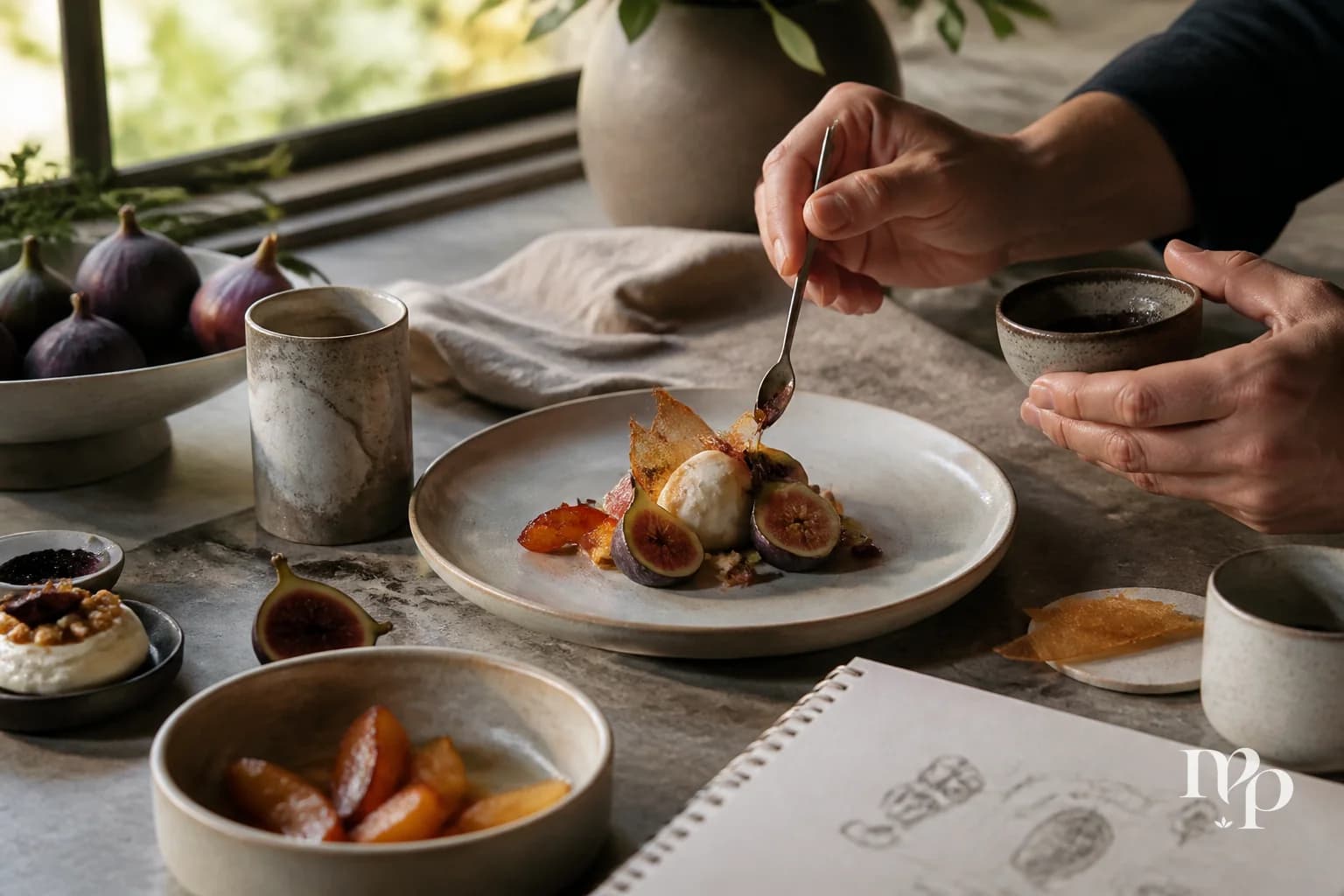
Figs are a good example. Fresh figs can feel luxurious, but they are often softer and more subtle than operators expect. They need contrast. Toasted nuts, bitter chocolate, cultured cream, olive oil, black tea, sesame, or a restrained caramel can give them a place to stand.
The tradeoff is shelf life and consistency. If the dessert depends on perfect figs every night, the menu may become fragile. If figs are used as one part of a larger architecture, the dish can feel seasonal without collapsing when fruit quality varies.
Seasonality should sharpen the dessert, not hold it hostage.
From Mistoura Pastry
This week’s journal pieces circled one idea from several angles: a restaurant dessert should belong to the house before it tries to become iconic.
- When a dessert learns the restaurant looks at how a final course can absorb the language of the room, the menu, and service.
- The dessert that earns its shape argues that form should come after purpose, not before it.
- The dessert the menu can keep focuses on the quieter test: whether a dessert can survive normal service with care.
If you are developing a house dessert, do not start with the plating. Start with the restaurant.
Design desserts that guests remember. Visit Mistoura Pastry.
Question of the Week
If your restaurant had to keep only one dessert for the next year, what would that dessert need to prove?
Not what would photograph well. Not what would impress another chef. What would it need to prove to the guest, the server, the kitchen, and the menu?
That answer is usually closer to a signature dessert than the first sketch.