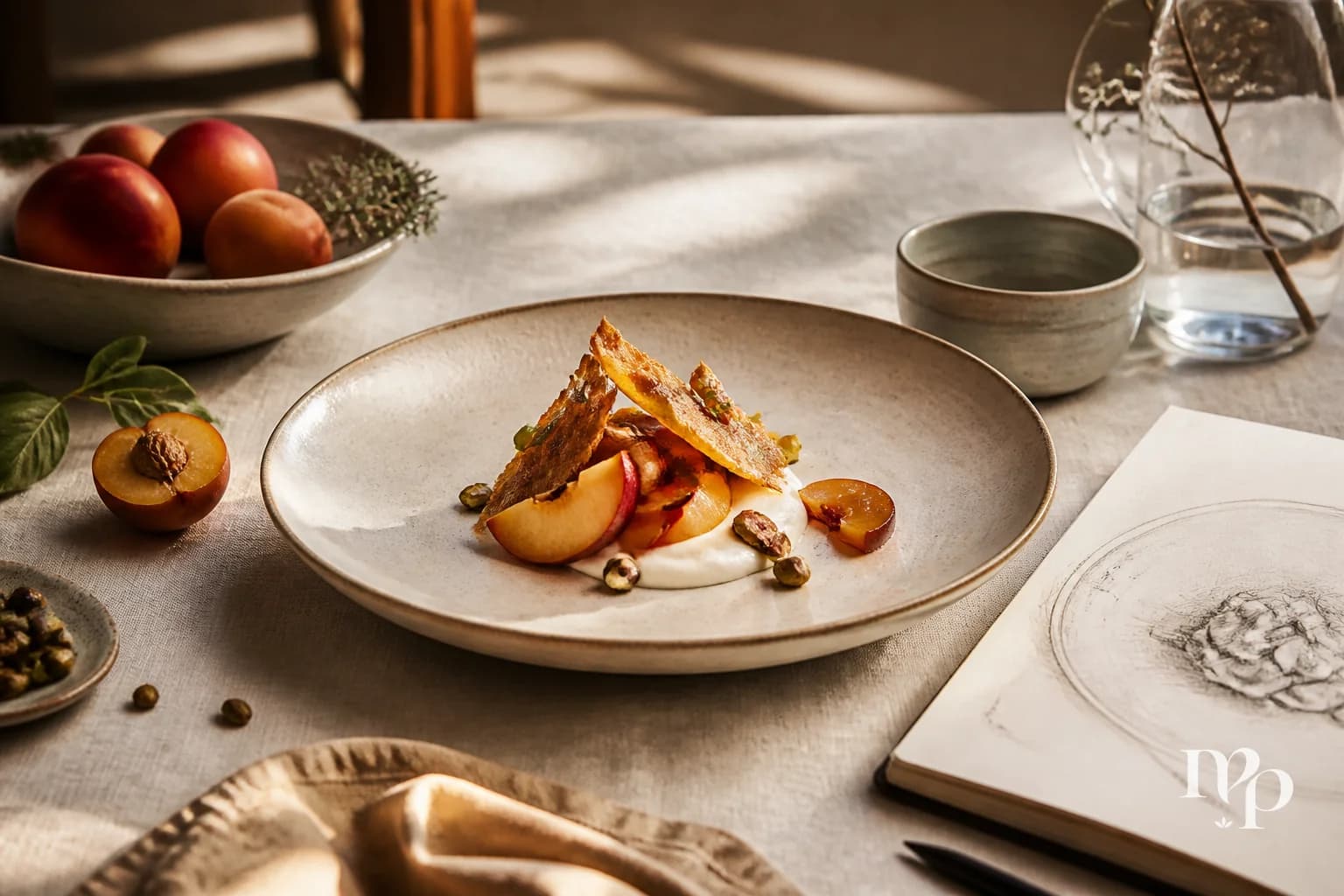
Studio Note
A dessert can fail quietly.
Not because the pastry is weak. Not because the garnish is wrong. Not because the chef lacked ambition. It fails because it feels like it came from somewhere else.
Restaurant dessert has a different job from pastry made for a counter, a hotel display, or a photographed launch. It enters late. Guests are full, conversation has shifted, the room has already taught them what kind of meal they are having. By the time dessert arrives, the restaurant has made a promise.
The final course either keeps that promise or changes the subject.
This week’s Mistoura Pastry journal focused on signature dessert development for restaurants: how a dessert inherits the room, how constraints shape the plate, and why a final course needs a clear reason beyond looking finished.
The sharper question is not: what dessert would impress?
It is: what dessert could only make sense here?
Dessert Strategy
A lot of dessert menus are built as insurance policies.
One chocolate option. One fruit option. One familiar comfort item. One lighter dish for the guest who says they are too full and then eats half of someone else’s plate.
There is nothing wrong with coverage. The problem starts when coverage replaces point of view.
A stronger restaurant dessert menu usually has three kinds of intent:
- A clear house dessert This is the dish that carries the restaurant’s voice. It does not need to be the most complex plate. It needs to feel owned. If your savory menu is restrained, smoky, mineral, coastal, bright, generous, rustic, precise, or theatrical, the signature dessert should understand that language.
- A contrast to the meal Dessert often works best when it resolves what came before. After richness, it can bring acid. After spice, it can bring dairy, fruit, or coolness. After a tasting menu with many small gestures, it may need one generous, legible finish instead of another delicate puzzle.
- A service realistic dish The most beautiful idea is not always the right restaurant dessert. If it requires too many last second actions during peak service, it will either slow the pass or get simplified into mediocrity. A signature dessert should respect the people carrying it, plating it, explaining it, and selling it.
What many teams get wrong: they start with the plate sketch.
Start with appetite instead. How full is the guest? How long is the meal? What texture has been missing? Does the room need drama, calm, refreshment, warmth, or generosity at the end?
The answer will narrow the dessert faster than another hour of garnish ideas.
Ingredient Study
Late summer fruit is seductive, but it can make dessert lazy.
Peak fruit does a lot of work. Figs, peaches, plums, berries, grapes, and early pears can make a menu feel seasonal before the pastry team has made a real decision. Slice it, gloss it, add cream, add crunch, call it done.
Sometimes that is enough. Often it is not.
Fruit needs a point of view too.
For restaurant dessert, late summer fruit is strongest when it is given contrast:
- Acid against dairy: roasted peach with cultured cream, lemon verbena, or yogurt sorbet.
- Bitterness against sweetness: fig with coffee, cocoa nib, burnt honey, or bitter almond.
- Salt against perfume: plum with olive oil, sea salt, or a lightly salted sablé.
- Heat against softness: grilled fruit, warm compote, toasted spice, or a crisp element that keeps the plate from turning sleepy.
- Less sugar, more ripeness: if the fruit is good, sugar should frame it, not flatten it.
The mistake is treating seasonal fruit as decoration. A few berries on a chocolate dessert do not make the dish seasonal. A peach garnish does not automatically give the final course a reason.
Better question: what is the fruit changing about the guest’s last bite?
If the answer is only color, keep working.
From Mistoura Pastry
Featured this week: Drawn from the dining room
The article argues for developing signature desserts from the restaurant outward. The room, service rhythm, flavor language, and guest appetite are not background details. They are part of the ingredient list.
Also worth reading from this week’s journal:
- A final course with a clear reason On why a dessert can look complete and still feel undecided.
- A final course in the restaurant's voice On matching dessert to the pace, tone, and appetite of the room.
- A signature dessert begins with constraints On why limits often produce stronger restaurant dessert work than open ended ambition.
- Before the final course is commissioned On what restaurants should settle before asking for a signature dessert.
Design desserts that guests remember. Visit Mistoura Pastry
Question of the Week
If a guest remembered only one thing about your dessert program, what would you want it to be?
Not the ingredient. Not the shape. Not the plating style.
The feeling.
Would it be generosity? Precision? surprise? comfort? restraint? nostalgia? freshness after a rich meal?
Write that word down. Then look at your dessert menu and ask which dish actually delivers it.
If none of them do, the menu may not need more options. It may need a stronger ending.