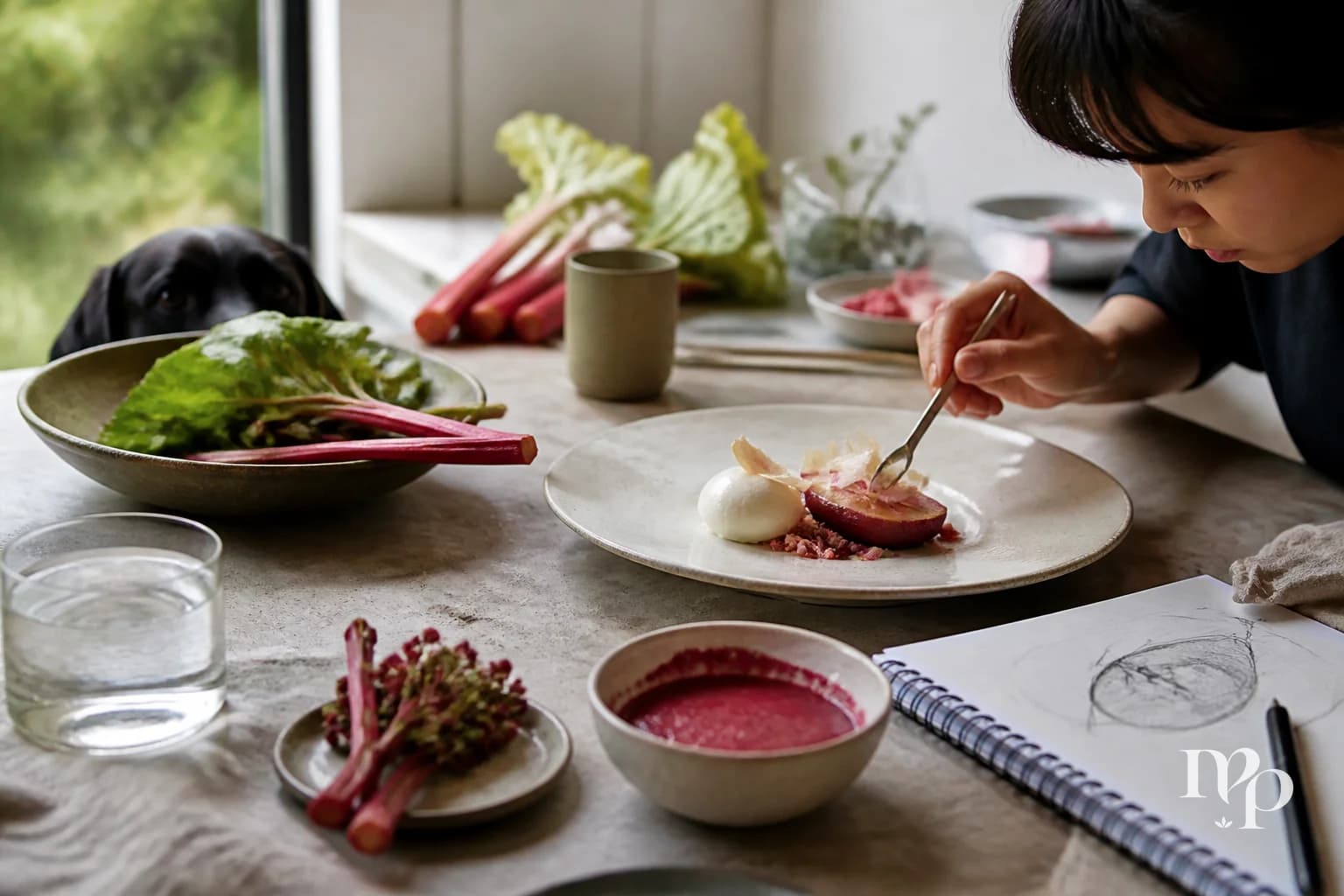
A dining room has a temperature that is not measured in degrees. You can feel it in the last half hour of service, when conversation loosens, plates slow down, and guests begin to decide whether the meal is ending or still opening.
Dessert enters that moment. If it ignores the temperature, it can feel like an interruption. If it reads it well, it becomes hospitality in another form.
The moment before the spoon
A restaurant dessert is often treated as a separate object, as if it appears after the meal rather than from inside it. That is where many menus lose their rhythm.
In hospitality experience design, the final course should not only taste considered. It should arrive with a sense of timing. That means its sweetness, portion, temperature, texture, and service style all respond to what the guest has already experienced.
A long tasting menu may need something lucid and cool. A generous neighborhood dinner may want warmth, familiarity, and a clear finish. A spare, precise restaurant may not be served by a dessert that suddenly becomes theatrical. The strongest choice is rarely the loudest one. It is the one that understands what the table can still receive.
We often find that dessert works best when it behaves less like a climax and more like a final sentence. It should carry weight, but it should not shout over everything that came before it.
What timing tastes like
Timing has flavor.
A late dessert with too much sugar can make the meal feel heavier than it was. A very cold dessert after a restrained savory progression can feel clean and awake. A warm element can slow the table gently, especially when paired with acidity or bitterness. Crunch can return attention. Cream can soften it. Fruit can bring the meal back to the season instead of pushing it toward ornament.
These choices are not decorative. They are part of the guest experience.
A dessert with a sense of timing considers pace first. How long does it take to finish? Does the guest need a knife and fork, or only a spoon? Can the server describe it in one clear line, or does it require a small lecture at the exact moment when the table wants ease?
For more on that service layer, we have written about The dessert service can carry. The plate is only one part of the work. The handoff matters too.
When hospitality becomes proportion
Proportion is one of the quietest tools in dessert design. It can make the difference between a generous ending and a tired one.
A restaurant does not always need a large dessert to feel hospitable. Sometimes hospitality is a smaller portion with sharper contrast. Sometimes it is a dessert that allows two guests to share without awkwardness. Sometimes it is a composition that gives the last bites enough variation to stay alive.
The question is not only, “Is this dessert good?” A more useful question is, “Does this dessert respect the point in the meal where it appears?”
That question changes the design. It may reduce the number of components. It may make sweetness more restrained so fruit, spice, chocolate, nut, dairy, or grain can speak clearly. It may move garnish from decoration into structure. It may ask whether the sauce is needed, or whether it is only filling space.
Decoration can flatter a plate. Composition gives it purpose.
The mistakes that slow the room
The most common mistake is adding intensity because dessert is last. More sweetness, more height, more garnish, more explanation. The assumption is that the ending must be bigger to be remembered.
Often, the opposite is true.
A dessert can become memorable because it arrives with clarity. The guest understands it before fatigue sets in. The first spoonful confirms the idea. The last spoonful does not punish them for finishing.
Another mistake is designing dessert apart from service. A fragile element may look graceful in development but suffer during a busy Saturday night. A frozen component may require timing the dining room cannot protect. A plate with too many small details may become inconsistent when the pastry station is under pressure.
A dessert that only works in silence does not yet belong to the restaurant.
This is also why a house dessert needs more than charm. It needs a place inside the operation and inside the meal. We explored that more directly in The house before the dessert.
Questions for a better ending
Before changing the dessert menu, a restaurant can ask a few quiet questions.
What does the guest usually feel before dessert arrives: full, curious, celebratory, rushed, settled?
Does the savory menu build toward richness, acidity, spice, smoke, delicacy, or comfort?
Should dessert extend that rhythm, interrupt it, or release it?
How much explanation can the table welcome at this point in the meal?
What texture is missing from the experience so far?
Is sweetness carrying the dessert, or is it supporting flavor?
Can the service team describe the dessert in language that feels natural to the restaurant?
Would this dessert still make sense on the menu three months from now, with seasonal adjustment, or is it only an attractive sketch?
These questions are not meant to make dessert cautious. They make it more specific.
A quieter checklist
A dessert with good timing usually has a few things in place:
- A clear role in the meal, not just a flavor idea
- Sweetness that supports the ingredient rather than covering it
- At least one texture that changes the pace of eating
- A portion that respects what came before it
- A service path the team can repeat with care
- A description that feels simple at the table
- A reason for every garnish, sauce, and accent
- Enough restraint for the final bite to feel clean
The list is simple. The discipline is in the editing.
From the studio
In our work, we look at dessert as part of the whole hospitality experience, not as a separate pastry exercise. The final course has to answer to the restaurant’s identity, the guest’s attention, the rhythm of service, and the memory the table carries out.
That does not make dessert less expressive. It gives expression a frame.
A dessert can be delicate, bold, familiar, unfamiliar, warm, cold, spare, or generous. What matters is whether those qualities arrive at the right moment and in the right proportion.
When timing is considered, the final course does not feel attached to the meal. It feels like the meal knew where it was going.
If your restaurant is shaping a dessert that needs to belong more clearly to the experience, Mistoura Pastry works with hospitality teams to design final courses with intention, restraint, and a sense of place.
Studio note
Mistoura Pastry approaches dessert as culinary design. The goal is not more sweetness or more decoration. The goal is a final course with flavor, restraint, and intention.