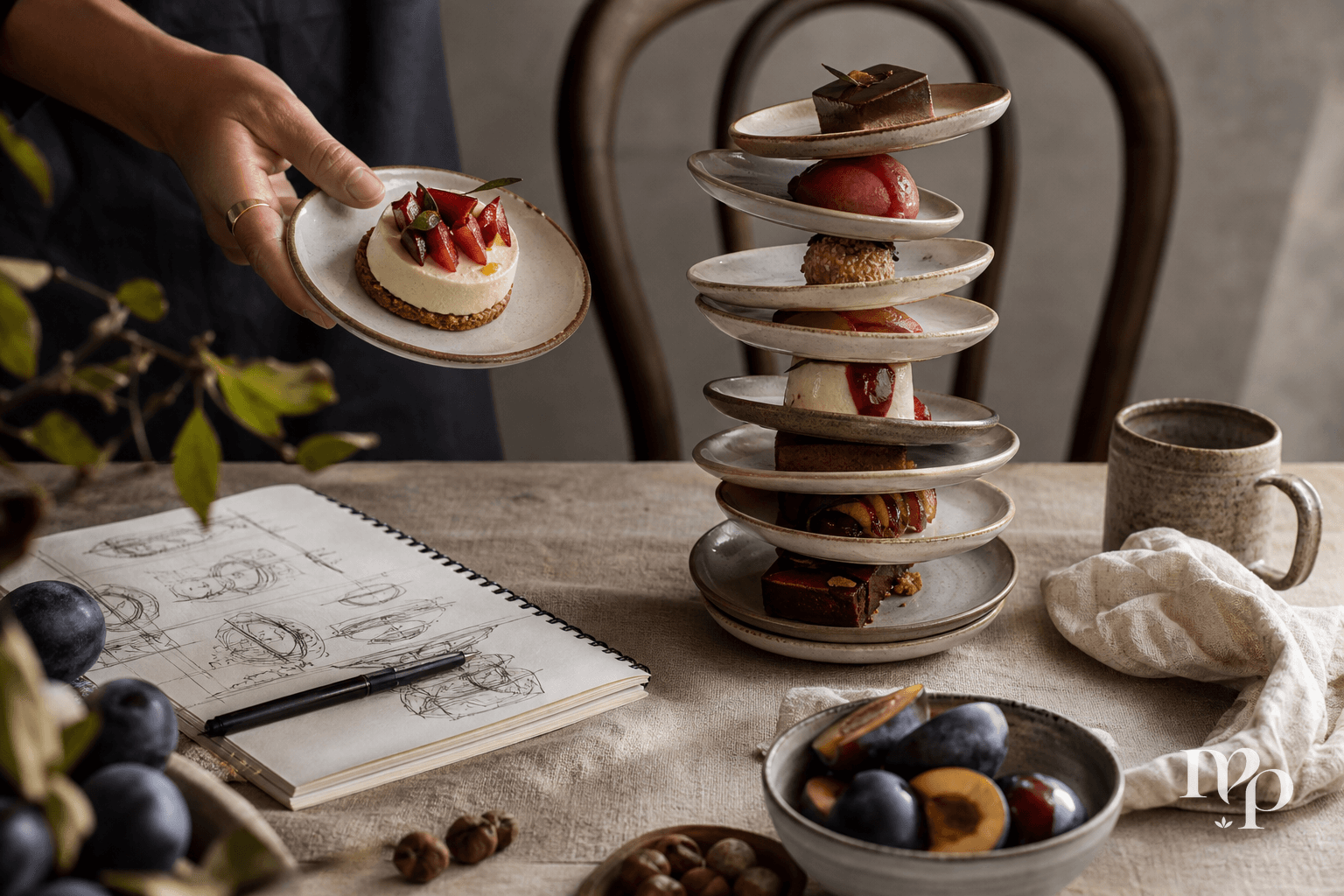
Dessert menus often grow for the wrong reasons. One more chocolate option. One lighter option. One fruit option. One classic because someone will ask for it. Soon the final page of the menu feels less like a point of view and more like a storage room.
The question is not simply how many desserts a restaurant should offer. The better question is how many desserts truly belong because the restaurant can make them meaningful.
Direct point of view
Most restaurants need fewer desserts than they think.
A focused dessert menu can be more memorable than a long one, provided each dessert has a reason to exist. Three precise desserts can say more about a restaurant than eight polite options. The tradeoff is obvious: a shorter menu gives guests less choice, but it gives the restaurant more control over quality, pacing, sourcing, prep, and identity.
Choice is not automatically hospitality. Sometimes choice is hesitation dressed up as generosity.
A dessert menu should not feel like a separate business attached to the end of dinner. It should feel like the final sentence of the same story.
Hospitality context
Restaurants often treat dessert as a safety net. Add something chocolate. Add something citrus. Add something with ice cream. Add a cheesecake because it sells somewhere else. That logic creates coverage, not character.
The final course carries unusual weight because it sits closest to the guest's memory of the meal. It is the last texture, the last temperature shift, the last aroma, the last plate cleared before the check arrives. If dessert feels generic, the meal loses definition right at the end.
For a neighborhood restaurant, the dessert menu might need warmth, familiarity, and seasonal rhythm. For a tasting menu, it may need precision and progression. For a hotel dining room, it may need to work across many guest types without becoming anonymous. For a cafe with evening service, dessert might bridge pastry language with plated restaurant thinking.
The right number depends on what the room is trying to be.
Design considerations
A useful dessert menu usually balances four types of decisions.
First, flavor range. Not every dessert needs to occupy a different category, but the menu should avoid repeating the same emotional register. Three sweet, creamy, brown desserts will feel heavy even if each is well made. A stronger set might include something dark and structured, something bright and seasonal, and something quiet with dairy, grain, nut, or spice.
Second, texture. Texture is often where dessert becomes memorable. Crisp against cream. Frozen against warm. Soft fruit against toasted crumb. A menu with varied textures feels more generous than a menu with more items but the same spoonable softness. For a deeper look at course meal texture, see When texture carries the final course.
Third, operational rhythm. A dessert that looks elegant on paper can become a problem if it slows service, depends on fragile garnishes, or requires too many last minute touches during peak dinner. Restraint is not only aesthetic. It protects the kitchen.
Fourth, identity. A dessert should sound like it belongs to the restaurant. If the savory menu is spare, coastal, and mineral, the dessert menu should not suddenly become theatrical and sugary. If the restaurant is fire driven and generous, dessert can carry smoke, char, warmth, or deep roasted notes without becoming obvious.
Common mistakes
The first mistake is adding desserts to solve indecision. If the team cannot choose between two ideas, both go on the menu. That usually weakens both.
The second mistake is designing by category instead of experience. Chocolate, fruit, frozen, gluten free, vegan, classic. Categories can help with coverage, but they do not create a point of view. A menu made entirely from categories often reads like it was assembled by fear.
The third mistake is confusing decoration with composition. A dessert is not more designed because it has more components. More dots, crumbs, flowers, tuile shapes, and sauces can make the plate louder while the flavor becomes less clear.
The fourth mistake is ignoring sweetness. Too many dessert menus end the meal with sugar fatigue. Less sugar does not mean less pleasure. It often allows acidity, bitterness, salt, dairy, fruit, chocolate, spice, and grain to speak with more precision.
The fifth mistake is keeping a dessert because it has always been there. Familiarity can be valuable. Habit is different.
Questions for operators
Before deciding the number, ask sharper questions than “what should we add?”
What should the guest feel at the end of the meal?
Does the dessert menu reflect the same intelligence as the savory menu?
Which dessert would someone remember without needing to photograph it?
Where are we repeating texture, sweetness, color, or temperature?
Which item creates the most stress for the kitchen relative to what it gives the guest?
Are we offering options because the concept needs them, or because we are afraid to edit?
What seasonal ingredient actually belongs here, rather than simply being available?
Can the menu be explained by the service team without apology?
Practical checklist
Use this as a simple working filter before expanding or cutting the dessert menu.
- Keep the menu small enough that every dessert can be executed with care.
- Give each dessert a clear role in the final course experience.
- Avoid repeating the same base, texture, temperature, or sweetness level.
- Include contrast, but do not force variety for its own sake.
- Design for the room, not for a generic idea of restaurant dessert.
- Consider prep, pickup time, storage, plating, and staff confidence.
- Let seasonality guide the menu only when it improves the idea.
- Remove anything that survives only because no one wants to question it.
- Make sure the final dessert list sounds like the restaurant, not a supplier catalog.
For many restaurants, three to five desserts is enough. A small tasting menu may need fewer. A hotel or larger venue may need more range. The number is not the strategy. The clarity is.
Studio note
At Mistoura Pastry, we think of dessert menus as small architectural plans. Every element has weight. Every addition changes the structure. A menu can feel generous without being crowded, refined without being cold, seasonal without becoming predictable.
The strongest dessert programs are not built from more options. They are built from better editing.
Quiet closing
Dessert does not need to shout at the end of the meal. It needs to land.
The right number of desserts is the number your restaurant can stand behind with confidence, precision, and restraint. Anything beyond that starts to dilute the final memory.
If your dessert menu needs a clearer point of view, Mistoura Pastry can help shape a final course that belongs to the restaurant, not just the menu.