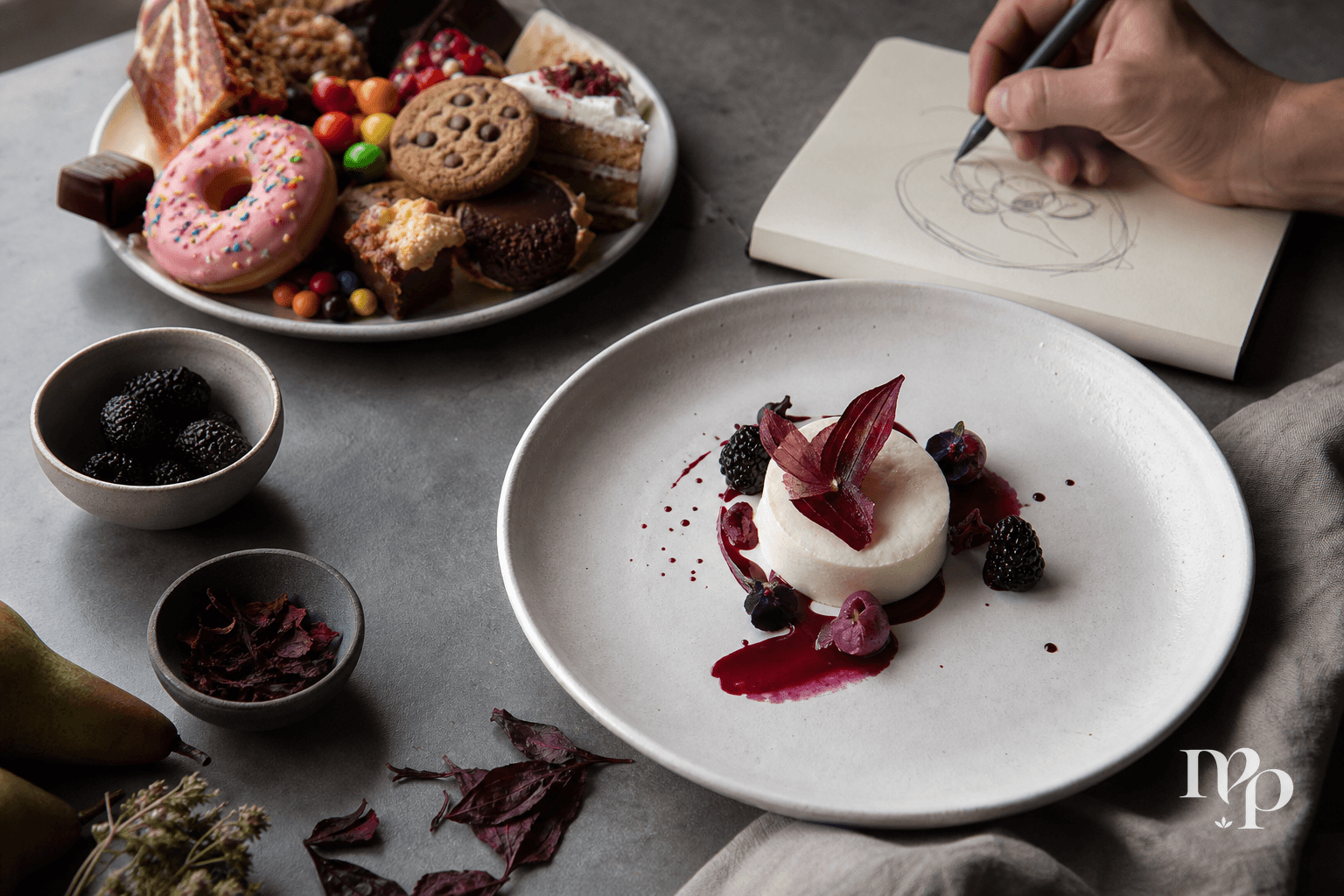
Some dessert menus feel like they were translated from another restaurant. The plates may be careful. The ingredients may be familiar. The technique may be sound. Still, something is off. The final course arrives with a different accent than the rest of the meal.
That is what happens when dessert is treated as a category instead of a language.
The point of view
A restaurant does not need a dessert menu that proves it can make every classic. It needs desserts that speak clearly for the place they belong to.
A dessert language is the set of choices that makes the final course feel native to the restaurant. It shows up in sweetness level, portion size, texture, temperature, plating, naming, service rhythm, and how much explanation the guest needs.
For one restaurant, that language may be spare and mineral, with citrus, herbs, clean dairy, and brittle textures. For another, it may be warmer, built around roasted fruit, deep spice, custard, and slower service. Neither is more correct. The question is whether the dessert sounds like the room.
Dessert should not be a decorative ending pasted onto a serious meal. It should carry the restaurant identity into the last memory.
Dessert belongs to the room
Guests do not experience dessert in isolation. They experience it after the bread, the wine, the salt, the pacing, the noise, the lighting, the weight of the plates, and the tone of service.
A large, sweet, heavily garnished dessert may make sense in one setting and feel exhausting in another. A quiet poached fruit with cream may feel generous in a restrained dining room and unfinished in a louder, more abundant one.
This is why dessert menu design is not only a pastry question. It is a hospitality question.
The final course has to understand what came before it. If the savory menu is fire, smoke, acid, and clean edges, the dessert should not suddenly become dense and sugary without a reason. If the restaurant is built around comfort, warmth, and slow conversation, a dessert that feels coldly architectural may create distance instead of pleasure.
A useful dessert language makes the guest feel that the meal has arrived somewhere intentional.
Design considerations
The strongest dessert language usually begins with restraint. Not minimalism for its own sake, but editing with purpose.
Flavor comes first. What does this restaurant taste like at the end of the meal? Bright and lifted, earthy and quiet, fruit forward, dairy led, bitter, toasted, floral, savory leaning? The answer should not be vague. It should guide the menu.
Texture gives the language its rhythm. Cream needs interruption. Crunch needs softness. Frozen elements need warmth or fragrance. A dessert without contrast can feel flat, but too much contrast becomes noise.
Proportion decides how the guest feels after the last bite. A restaurant dessert does not need to dominate the table to be remembered. Often the better choice is a portion that lets flavor stay precise and service stay graceful.
Ingredients should still taste like themselves. If pear is on the plate, the guest should taste pear, not only sugar, spice, and technique. If chocolate is used, decide whether it should feel bitter, creamy, roasted, light, or dense. Chocolate is not a point of view by itself.
Service also matters. Some desserts can tolerate tableside explanation. Others lose their charm if they require a speech. The more composed the restaurant experience, the more carefully the dessert should handle timing, temperature, and movement from kitchen to table.
If the issue is range rather than voice, we wrote separately about How many desserts belong on a restaurant menu. Number matters, but language matters first.
Common mistakes
The first mistake is borrowing a dessert style without borrowing the logic behind it. A plated dessert from another kind of restaurant can look impressive and still feel wrong for the room.
The second is confusing decoration with composition. A garnish should clarify the idea, not apologize for a weak one. More elements do not automatically create more interest.
The third is letting sweetness flatten everything. Sugar can support fruit, soften bitterness, carry aroma, and create texture. It can also erase origin. Less sugar is not always the answer, but uncontrolled sweetness usually narrows the dessert language.
The fourth is treating classics as safe by default. A classic dessert only works if it has a reason to be on that menu, in that version, at that moment. Familiarity is useful. Generic familiarity is not.
The fifth is ignoring the last memory. Dessert does not need to summarize the entire restaurant, but it should leave the guest with a final impression that belongs to the experience.
Questions for operators
Before adding, removing, or redesigning desserts, a restaurant can ask a few plain questions.
What should the guest feel at the end of the meal: refreshed, comforted, surprised, settled, intrigued, warmed?
Which flavors already define the savory menu, and which ones should dessert avoid repeating too heavily?
Does the room ask for abundance, restraint, precision, looseness, ceremony, or ease?
How much time does the kitchen realistically have for dessert service during peak pressure?
Can each dessert be described in one clear sentence without sounding like a list of components?
Is there one dessert that could only really belong here?
That last question is useful. A signature dessert is not always the most elaborate plate. It is the one that makes the restaurant more itself.
A simple checklist
Use this as a quick edit before a dessert reaches the menu.
- The dessert matches the restaurant identity, not only the pastry chef’s range.
- The sweetness level leaves room for flavor.
- The texture has contrast without clutter.
- The portion respects the end of the meal.
- The ingredients are recognizable and purposeful.
- The plate can be served consistently during real service.
- The name and description fit the tone of the menu.
- The dessert creates a final memory instead of a sugar stop.
If several items fail, the dessert may not need more work. It may need a clearer reason to exist.
Studio note
At Mistoura Pastry, we often begin dessert development by looking away from dessert for a moment. We look at the restaurant’s savory structure, service rhythm, visual language, ingredients, and the kind of memory the room seems to be building.
Only then does pastry enter the conversation.
That order matters. Technique is valuable, but technique without direction can make a dessert feel detached. A good dessert language gives technique a place to go.
Our perspective is shaped by movement between Togo, France, and the United States, but not as a set of slogans to place on a menu. What matters is attention: to origin, proportion, restraint, generosity, and the way flavor changes when it enters a specific hospitality context.
A quieter finish
A restaurant dessert menu does not need to shout. It does not need to chase whatever looks current. It does not need to carry every possible guest preference on one small card.
It needs a voice.
When dessert has its own language, the final course feels less like an obligation and more like a last gesture from the restaurant. Not louder than the meal. Not separate from it. Just clear enough to be remembered.
For restaurants, cafes, hotels, and hospitality teams shaping a more intentional dessert experience, Mistoura Pastry develops dessert concepts with flavor, texture, service, and identity in mind.