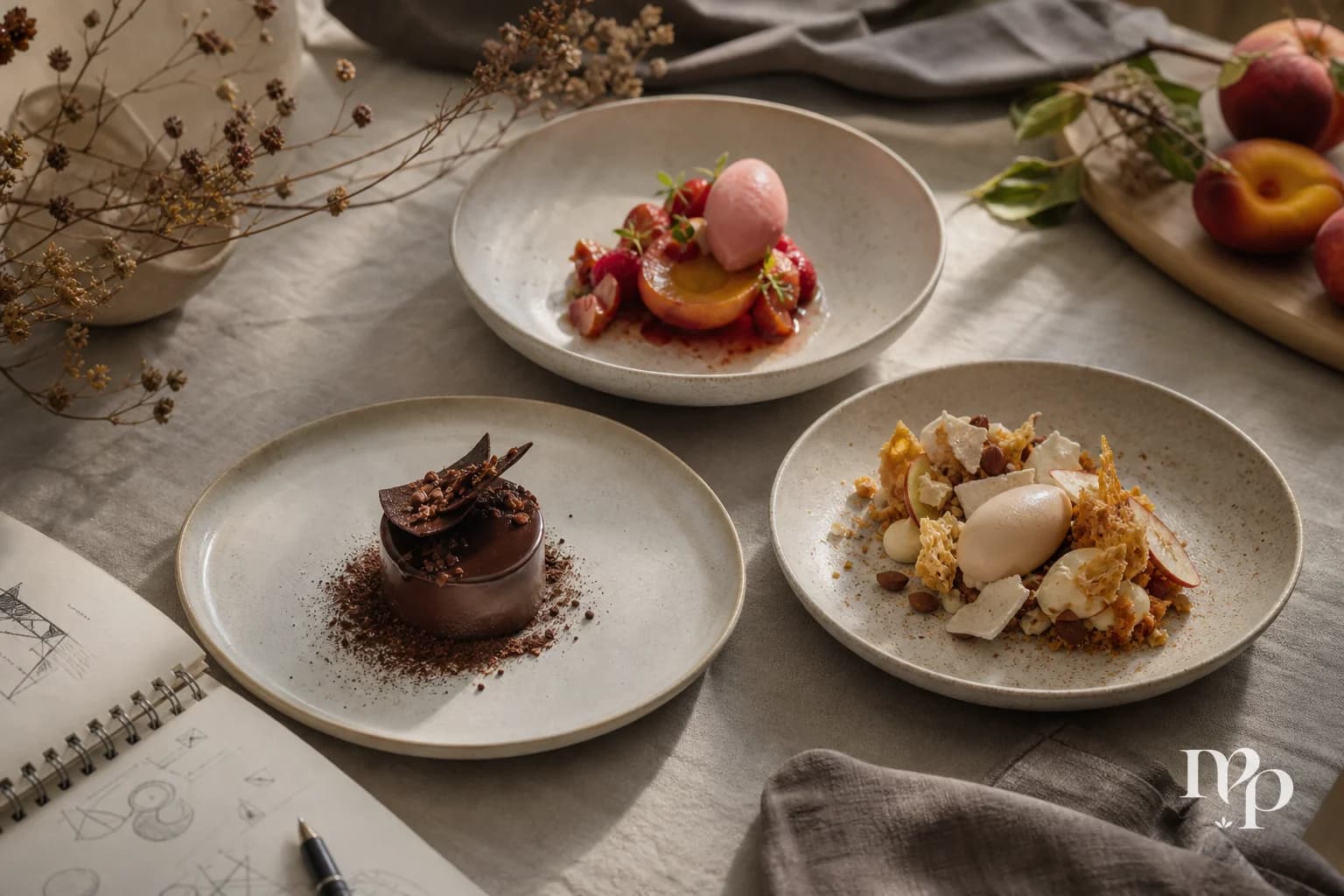
Studio Note
Dessert menus get bloated quietly.
One chocolate dessert because guests expect it. One fruit dessert because the menu needs something lighter. One classic because the owner likes it. One plated showpiece because the dining room wants drama.
None of those choices are wrong on their own. The problem is when the dessert page becomes a collection of obligations instead of a point of view.
This weekly review keeps the thinking simple: a shorter dessert menu is not automatically better, but a vague dessert menu is almost always weaker, while a sharper edit gives the guest a clearer memory.
Dessert Strategy
The question is not really, “How many desserts should we offer?”
It is closer to: “How many desserts can we make distinct, repeatable, and worth remembering?”
For many restaurants, three to five desserts is enough. Not because there is magic in the number, but because restraint forces decisions.
A useful dessert menu often has clear roles:
- One rich, comforting anchor
- One bright or fruit driven option
- One textural or seasonal piece with a stronger point of view
- Maybe one simple low friction item if the room demands it
What people get wrong is treating variety as hospitality. Variety can help, but only when each option earns its space. Eight desserts that all sit in the same sweetness, creaminess, and portion size do not feel generous. They feel unfocused.
The tradeoff is real. A tighter menu gives guests fewer choices, but it gives the kitchen more control and gives the restaurant a better chance at being remembered for something specific.
If a dessert cannot be described by the team with a little energy, it may not belong on the menu yet.
Ingredient Study
Less sugar is not a slogan. It is a design choice.
When operators ask for a dessert that feels lighter, the answer is not always “use less sugar” and stop there. Sugar affects sweetness, yes, but also texture, moisture, browning, freezing point, shelf life, and the way flavor carries.
A better approach is to build contrast so sweetness does not have to do all the work.
Try thinking in pairs:
- Caramel with cultured dairy
- Chocolate with salt and bitterness
- Roasted fruit with citrus or vinegar
- Nut praline with fresh herbs
- Creamy elements with crisp, dry, or toasted components
A dessert can taste generous without being heavy. That usually comes from structure, not restraint alone.
For restaurants, this is where a signature dessert can become more than a sweet ending. If the final course has acidity, crunch, temperature contrast, and a clean finish, guests are more likely to order it even after a full meal.
From Mistoura Pastry
This week’s featured article: How many desserts belong on a restaurant menu.
The piece is a practical guide for restaurant operators deciding whether their dessert menu needs more options or more discipline. It covers menu restraint, guest memory, kitchen reality, and why three precise desserts can sometimes say more than eight polite ones.
A useful exercise from the article: look at your current dessert list and ask what each item is doing.
Is it there to create comfort? To show seasonality? To give the kitchen a fast pickup? To serve a dietary need? To create a signature memory?
If the answer is only “people might want it,” that may not be enough.
Explore more at Mistoura Pastry.
Design desserts that guests remember.
Question of the Week
If your restaurant could only keep three desserts on the menu for the next month, which three would survive?
Not the three most familiar. Not the three easiest to justify internally. The three that best explain the restaurant.
That answer is usually more revealing than a sales report alone.