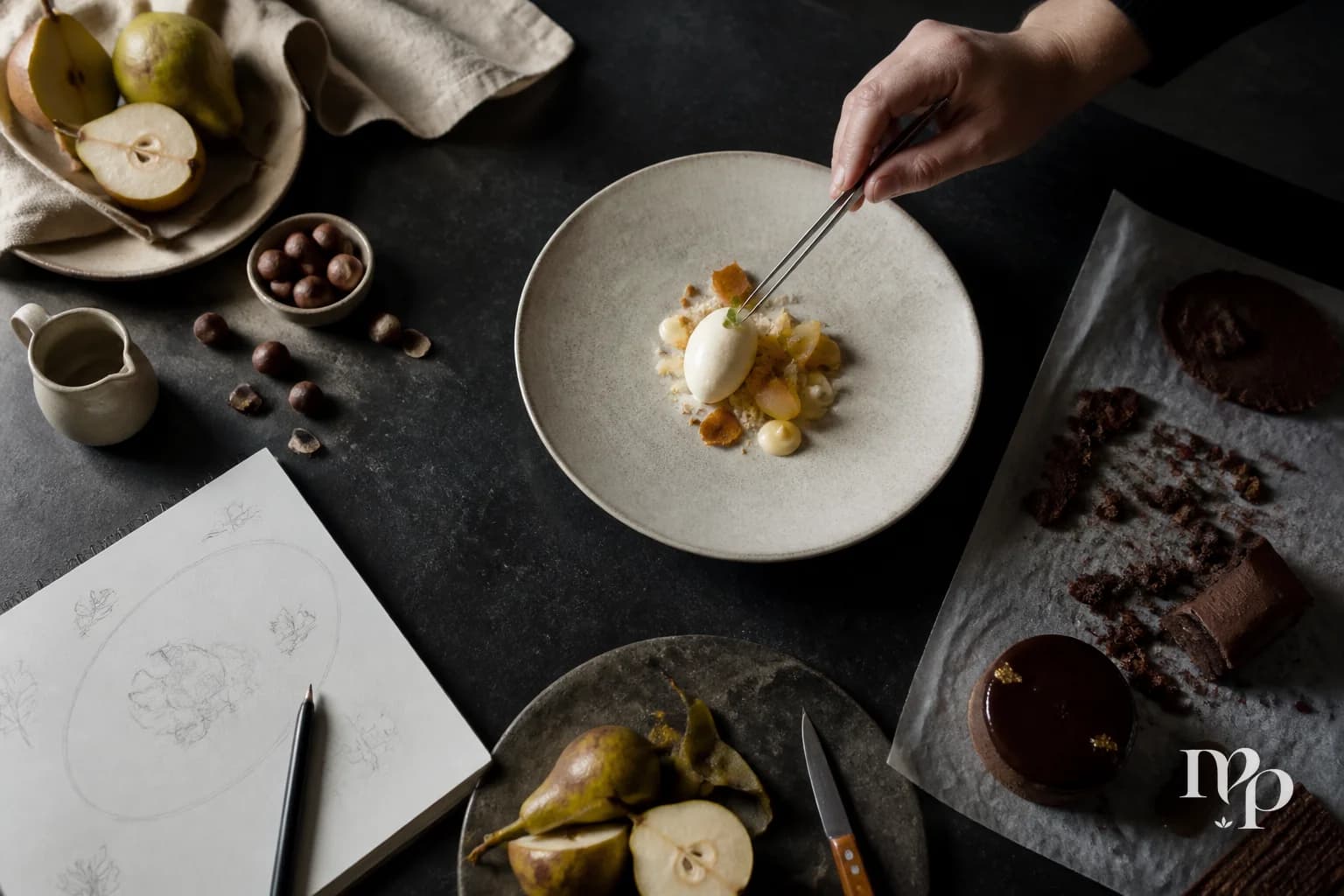
A dessert menu can go tired quietly. Nothing breaks. The plates still leave the pass. Guests still order something with chocolate. But the final course starts to feel borrowed from another restaurant, another season, another idea of hospitality.
Changing the dessert menu is not the same as refreshing it. A change should solve something. It should clarify the meal, support the room, respect service, and leave the guest with a memory that belongs to this table, not just to pastry in general.
The menu should know why it is changing
The weakest reason to change a dessert menu is boredom inside the operation. The kitchen has seen the plate too many times. The dining room has described it too many times. Someone wants a new garnish, a new flavor, a new finish.
That may be valid, but it is not enough.
A stronger reason begins with a specific tension. Maybe the savory menu has shifted lighter, but dessert still lands with too much weight. Maybe the restaurant has become more focused, while the final course still feels scattered. Maybe a dessert sells because it is familiar, but it says nothing about the restaurant.
A useful point of view is simple: dessert should not be an afterthought, but it also should not try to steal the whole meal at the last minute. It should complete the rhythm. Sometimes that means a quiet fruit dessert. Sometimes it means bitterness, warmth, cream, crunch, smoke, citrus, or a restrained chocolate composition. What matters is whether the change gives the final course a clearer job.
For restaurants thinking about structure before changing dishes, How many desserts belong on a restaurant menu is a useful companion question.
What the room has already promised
By the time dessert arrives, the guest has learned the restaurant’s language. They have felt the pace of service, the weight of the plates, the generosity of the portions, the confidence or softness of the seasoning. Dessert enters a room that already has expectations.
This is where many menus lose their nerve. A spare, ingredient led restaurant finishes with a dessert that feels overbuilt. A lively, generous room ends with something so delicate it disappears. A polished hotel menu offers a final course that could belong anywhere because it is decorated beautifully but composed without identity.
The last course does not need to repeat the savory menu. It needs to understand it.
If the meal has been rich, the dessert may need lift. If the room is celebratory, the dessert may need presence without noise. If the concept is rooted in place, the final course should not suddenly become vague. Seasonality can help, but seasonality alone is not identity. A summer fruit dessert can still feel generic. A citrus cream can still feel considered in winter if its proportion, temperature, and texture belong to the meal.
The parts worth changing first
Before replacing every dessert, look at the design choices that shape the guest experience.
Start with proportion. A dessert can fail because it is too large for the end of the meal or too small for the promise of the restaurant. Size is not only cost or plating. It is hospitality. It tells the guest how much the room wants them to linger.
Then look at sweetness. More sugar can flatten flavor and shorten attention. Less sugar is not a virtue by itself, but restraint can make fruit taste more like fruit, chocolate feel deeper, dairy feel cleaner, and bitterness feel welcome.
Texture is often the quiet repair. A soft dessert may need a crisp edge. A cold dessert may need warmth nearby. A dense composition may need air, acid, or a clean finish. The goal is not to add elements. The goal is to give the spoon a reason to return.
Temperature matters too. A dessert that arrives cold, warm, melting, or freshly finished changes the room’s perception of care. But that choice must survive service. A beautiful idea that collapses during a busy seating is not a finished design.
Where a refresh loses its shape
The common mistake is changing the visible part first. New garnish. New plate. New quenelle. New sauce color. These choices may help, but decoration cannot carry a weak composition.
Another mistake is replacing familiar desserts only because they feel ordinary. Familiarity is not the enemy. A custard, tart, cake, cream, frozen element, or fruit dessert can become distinctive through proportion, contrast, restraint, and a point of view. The problem is not recognition. The problem is sameness without intention.
There is also the mistake of adding too much meaning. A dessert does not need to explain the whole concept in one plate. If every element is asked to symbolize something, the guest often tastes confusion. The strongest version may be simpler: one clear ingredient, one supporting flavor, one texture that changes the bite, one finish that lingers.
And then there is the operational mistake: designing a dessert for the photograph, not for the pass. If the service team cannot describe it naturally, if the kitchen cannot plate it consistently, if the final bite does not justify the work, the menu change has not done its job.
For a deeper look at identity across the whole dessert offering, see Why every restaurant needs its own dessert language.
Questions before the spoon changes
Before a restaurant changes its dessert menu, we often find these questions more useful than asking what is new.
What should the guest feel after the final bite: refreshed, comforted, surprised, settled, awake?
Which dessert currently feels most connected to the restaurant, and why?
Which dessert sells because it is safe, but adds little to the memory of the meal?
Is the menu repeating the same texture under different names?
Does the sweetness level match the style of the savory menu?
Can the service team explain each dessert in a sentence that sounds human?
Does the menu offer enough contrast without becoming a list of unrelated ideas?
What ingredient or flavor belongs to this season, this room, and this kitchen right now?
These questions slow the change down in a good way. They keep the conversation away from novelty and close to experience.
A quieter checklist
A dessert menu change does not need to become a full reinvention. A careful edit can be stronger.
Keep one anchor if it still belongs.
Remove one dessert that feels disconnected from the restaurant’s current identity.
Add one composition with a clear seasonal reason, not just a seasonal ingredient.
Check sweetness against the full meal, not against other desserts.
Vary texture with intention: crisp, soft, creamy, airy, warm, cold, clean, dense.
Make sure each dessert has a different role on the menu.
Test the language with the dining room team before the menu prints.
Protect consistency during service.
Leave space for the final bite to feel composed, not crowded.
From the studio
At Mistoura Pastry, we think about dessert changes as design decisions before pastry decisions. The question is not only what can be made. It is what should remain in the guest’s memory when the table is cleared.
That memory is built through flavor, but also through restraint. Through the way cream meets acidity. Through the sound of a crisp layer. Through a warm element arriving at the right moment. Through a plate that feels generous without becoming heavy.
A restaurant dessert menu does not need constant motion. It needs attention. Some dishes should stay because they have earned their place. Some should leave because the restaurant has outgrown them. Some should be rebuilt quietly until they finally speak in the right tone.
The best change is not always the most visible one. Sometimes it is the moment a dessert stops feeling like a category and starts feeling like the last sentence of the meal.
If your restaurant, hotel, cafe, or hospitality team is reconsidering the final course, Mistoura Pastry can help shape a dessert menu with more intention.
Studio note
Mistoura Pastry approaches dessert as culinary design. The goal is not more sweetness or more decoration. The goal is a final course with flavor, restraint, and intention.