A summer dessert can fail by trying too hard to look like summer.
Too many berries. Too much color. A flower placed where flavor has not earned it. The plate announces the season, but the guest only tastes sugar, cream, cold, and effort.
Seasonality is quieter than that. It is not just a change in produce. It is a change in appetite, pace, temperature, mood, and memory. A July table does not ask for the same ending as a November table. The final course has to notice.
What the season is allowed to change
A seasonal dessert menu should not be a rotating display case of available fruit. Availability matters, but it is only the beginning.
The stronger question is: what does this season make the guest ready for?
In warmer months, the answer may be brightness, lift, acidity, water, herbs, a colder spoon, a thinner cream, a cleaner finish. In cooler months, it may be depth, warmth, bitterness, spice, roasted notes, pastry that carries weight without becoming heavy.
That does not mean every summer dessert must be light or every winter dessert must be rich. Those shortcuts become predictable. What matters is proportion. A dense chocolate dessert can belong in summer if it has enough contrast, salt, fruit acid, or temperature play. A citrus dessert can belong in winter if it has structure, bitterness, and warmth around it.
Seasonality edits the dessert. It does not write the whole thing for you.
The room changes before the menu does
Restaurants often think about seasonal desserts from the kitchen outward. What is at the market? What fruit is ripe? What can the pastry station execute?
Those questions are necessary. They are not enough.
The dining room changes first. Guests arrive differently in July than they do in January. They may eat later. They may drink differently. They may share more. They may want a final course that feels cooling instead of ceremonial, vivid instead of heavy, quiet instead of ornate.
Service also changes. A dessert that depends on a fragile frozen element may be beautiful in theory but punishing during a hot, crowded service. A plated fruit composition may feel effortless to the guest and chaotic to the team if ripeness shifts every day and no one has built a plan for it.
Hospitality lives in that gap. The dessert should feel seasonal to the guest without creating unnecessary strain for the people serving it.
Before the spoon reaches the table
Seasonal design is mostly a matter of editing.
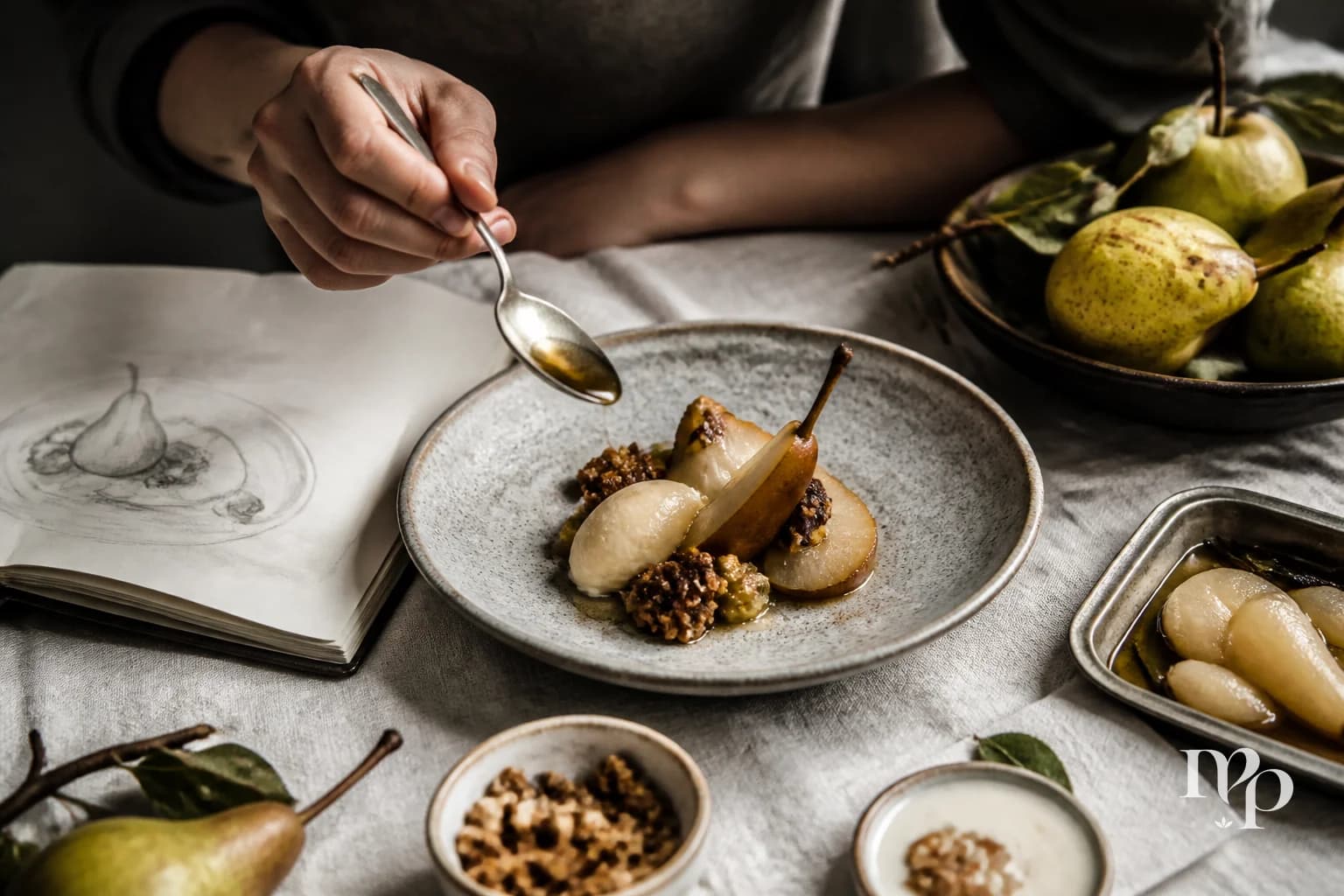
Start with the ingredient, then protect its character. If peach is the point, the dessert should not bury it under vanilla, caramel, almond, cream, crumble, sorbet, and petals until peach becomes a suggestion. If fig is the point, let its density and grain matter. If citrus is the point, do not polish away all bitterness. An ingredient should still taste like itself.
Texture gives the season a body. A summer dessert may need snap, chill, juice, foam, or a thin crisp that disappears quickly. A fall dessert may carry tenderness, chew, warmth, or toasted edges. The texture should match the appetite of the moment, not just fill space on the plate. That is why course meal texture belongs early in seasonal dessert planning.
Sweetness needs the same restraint. Ripe fruit already brings sugar, aroma, and softness. Adding more sugar can flatten what made the ingredient worth using. We wrote more about that in Why less sugar can create more flavor, because restraint is not a diet gesture. It is a flavor decision.
Temperature is another quiet tool. Cold can sharpen fruit and refresh the palate. Warmth can release aroma and slow the guest down. A contrast between the two can give the final course rhythm, as long as it serves the idea rather than showing off technique.
Where seasonal desserts lose their nerve
The first mistake is decoration pretending to be seasonality.
A strawberry on the plate does not make the dessert seasonal if the structure could belong to any month. A garnish should not carry the whole argument. If the ingredient is only visible at the end, it may not be central enough.
The second mistake is changing too much at once. A restaurant does not need to rebuild its entire dessert identity every time the weather changes. The strongest menus keep a recognizable voice while allowing the season to shift emphasis. The guest should feel renewal, not whiplash.
The third mistake is letting novelty replace clarity. Seasonal ingredients can tempt a kitchen into adding every fleeting thing at once. Rhubarb, basil, strawberry, elderflower, pistachio, yogurt, olive oil, and meringue may all be good. Together, they may stop listening to each other.
The fourth mistake is ignoring service. A dessert that requires perfect timing, rare produce consistency, and a long explanation may be better suited to a tasting menu than a busy restaurant with a short final course window. Design has to respect the room it enters.
If a menu change is already being considered, Before the dessert menu changes is a useful companion to this question. Seasonality should be one reason to change, not the only one.
Questions for the final course
Before adding a seasonal dessert, we often find it useful to ask:
What does the guest need after this particular meal, in this particular season?
Which ingredient is actually leading the dessert, and which elements are only supporting it?
Does the dessert feel like it belongs to the restaurant, or could it be moved anywhere without changing its meaning?
Is the seasonal reference tasted clearly, or only seen?
What texture is missing from the rest of the menu?
Will the dessert hold its quality during real service, not just in a quiet test?
Can the service team describe it in one clean sentence without sounding like they are reciting a list?
Those questions prevent seasonality from becoming decoration, trend, or clutter.
A quieter checklist
A seasonal dessert menu does not need a complicated framework. It needs attention.
Choose one leading seasonal idea.
Protect the ingredient’s own flavor.
Use sweetness to reveal, not cover.
Let texture express the weather and the appetite.
Check the dessert against the savory menu before finalizing it.
Design for the pace of service.
Keep the restaurant’s identity visible through the change.
Remove one element before adding another.
Make sure the final bite is the one you want remembered.
From the studio
At Mistoura Pastry, we do not treat seasonality as a styling brief. It is part of composition.
Our perspective is shaped by movement between Togo, France, and the United States, where ingredients, climate, restraint, generosity, and service do not always speak in the same accent. That mix has made us attentive to what changes when a dessert crosses a table, a season, or a dining culture.
A seasonal dessert should not flatten those differences into a slogan. It should hold them with care. The strongest version may be simple, but it should not feel generic. It should have a reason for being there now.
Leave the guest with the weather
The final course does not need to announce the calendar. It can do something more lasting.
It can leave the guest with the clean edge of citrus after a long meal. The coolness of melon and herb. The warmth of roasted fruit. The small bitterness that makes sweetness feel grown up. The texture that makes one more bite feel possible.
Seasonality is not about proving the menu changed. It is about making the ending feel alive to the moment.
If your restaurant is rethinking how dessert should carry the season, Mistoura Pastry works with hospitality teams on final courses that feel intentional, distinctive, and grounded in service. Start with Mistoura Pastry.
Studio note
Mistoura Pastry approaches dessert as culinary design. The goal is not more sweetness or more decoration. The goal is a final course with flavor, restraint, and intention.